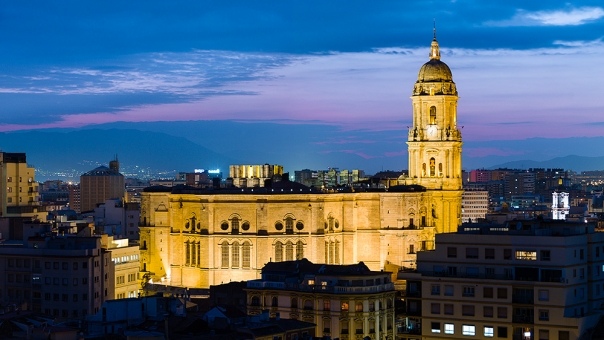
In all cities a Cathedral is always something important, but here in Malaga it is even more important, because it is not only a religious building, it is also a reference, a citizen landmark, a milestone on the road and a witness to many events.
The building is one of the best samples of Spanish religious art: located on the remains of other cultural samples such as the primitive Almohad mosque.
Her full name is Our Lady of the Incarnation although for the people of Malaga it is simply "the Cathedral". In all cities a cathedral is always something important, but here in Malaga it is even more important, because it is not only a religious building, it is also a reference, a citizen landmark, a milestone on the road and a witness to many events.
The building is one of the best samples of Spanish religious art: located on the remains of other cultural samples such as the primitive Almohad mosque.
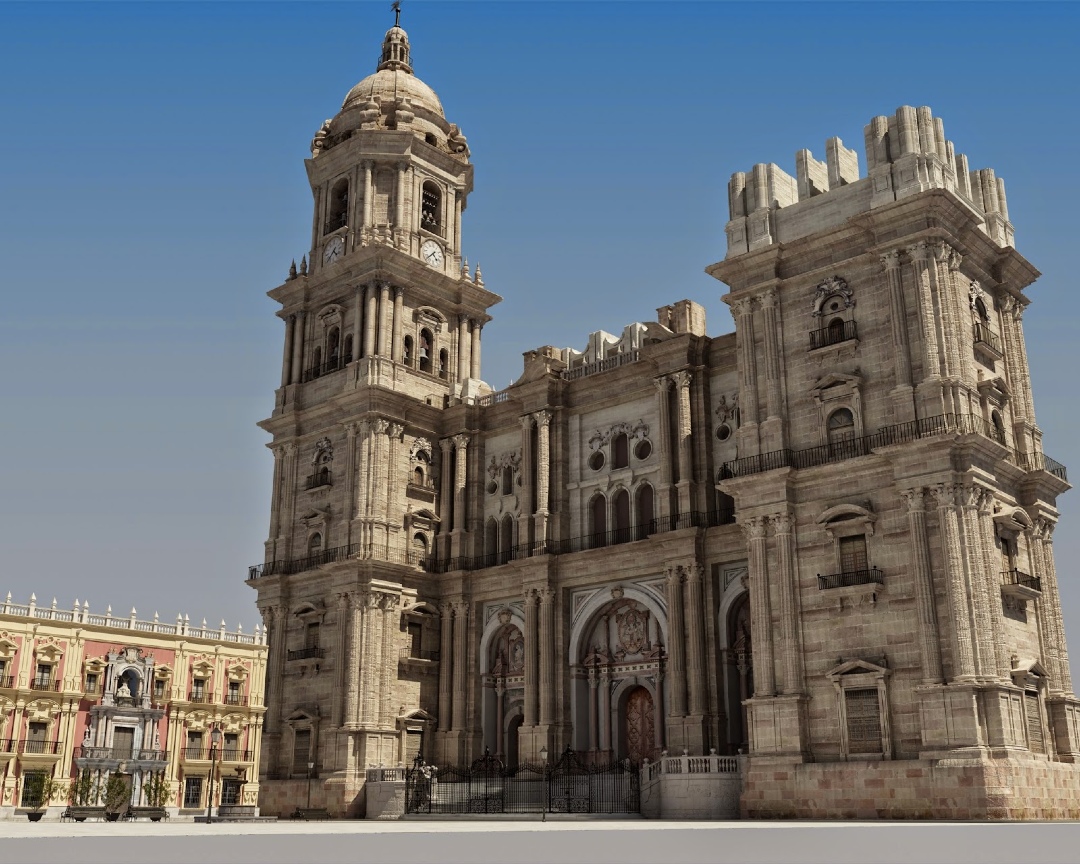
Its traces began around 1,530 and was completed in the eighteenth century, although it is an unfinished work since it lacks the top of the main facade and the south tower. Even today there is a legend that says that the money destined to the termination of that tower was spent on financing the wars in America in the early nineteenth century, although it has been shown that this money really went to finance urgent public works in the province.
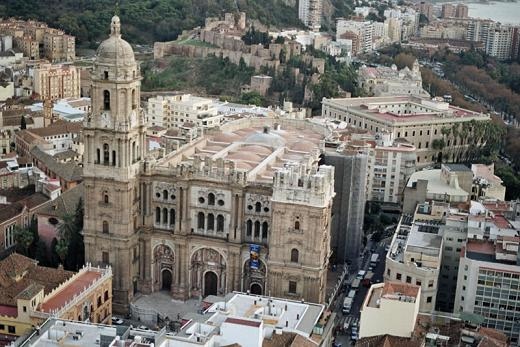
With a three-nave plant with an ambulatory, it is, in a way, an evolution of Gothic art that in its first moment welcomed the new Renaissance ideas, with all the ships of the same height with empty vaults form those so characteristic cupulines that are seen from above , for example when you see the cathedral from the Málaga Palacio hotel.
The covers of the cathedral are known as the one of the Chains, in front of the Palace of Zea-Salvatierra with its gardens and its patio of the orange trees; the main one, known as that of the Plaza del Obispo and, although it is not integrated in the Cathedral, the facade of the Tabernacle.